

Asian Management Research
and Case Conference
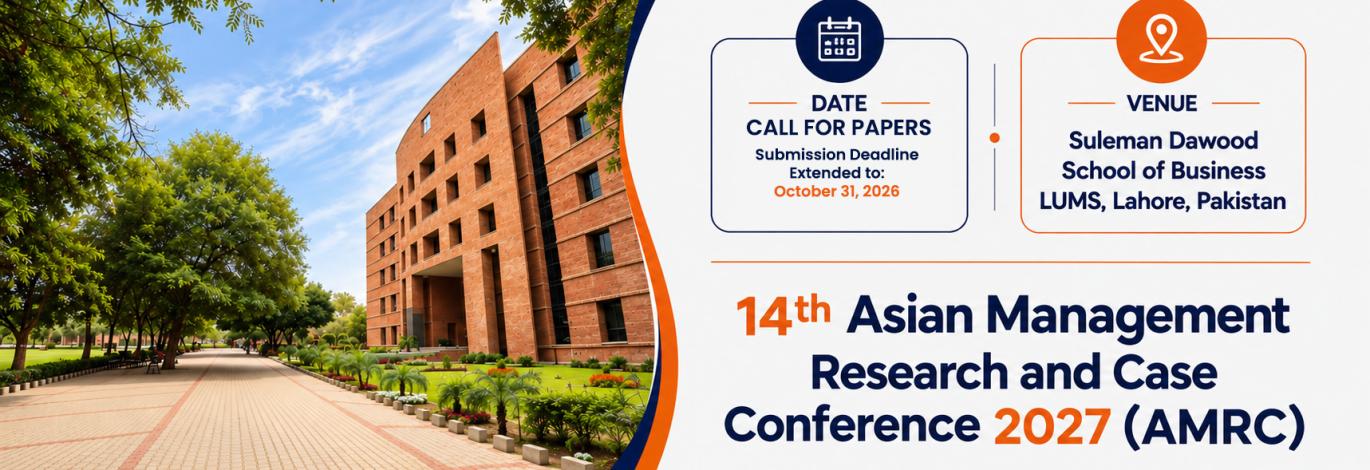
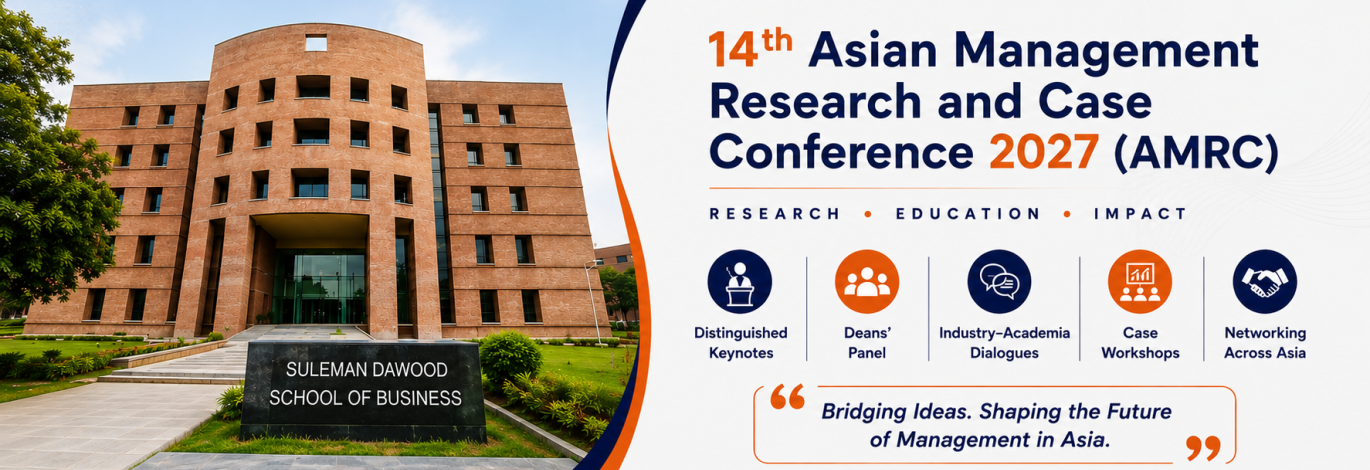

Managing Through Disruption: Intelligent Organisations, Responsible Leadership and Sustainable Futures
Introduction
Organisations today face disruption on multiple fronts. Artificial intelligence, geopolitical uncertainty, climate change, evolving stakeholder expectations, and changing patterns of work are reshaping industries and redefining how businesses compete. Together, these forces are altering the capabilities organisations and leaders need to succeed.
Technology alone is not the answer. Competitive advantage will increasingly depend on an organisation's ability to learn continuously, adapt quickly, and make better decisions by combining data, artificial intelligence, and human expertise to create new value. Equally important is leadership that inspires trust, acts responsibly, and ensures that technological progress serves both business and society. The future will belong to those who can embrace change without losing sight of their broader responsibilities. Building sustainable futures requires balancing innovation with responsibility, economic performance with environmental stewardship, and creating impact that endures.
A Full-Day Islamic Finance Track on January 30, 2027, at the AMRC 2027 Conference
The Centre for Islamic Finance (CIF) at SDSB-LUMS invites submissions for the Islamic Finance Track at AMRC 2027, under the theme:
Islamic Finance: From Niche to National
Islamic finance has evolved from a specialised segment of the financial industry into an increasingly significant component of national financial systems. As Islamic financial institutions become integral to banking systems and financial markets, there is a growing need to rethink how Islamic finance is researched, taught, and understood within the broader disciplines of finance and economics.
Islamic finance scholarship has traditionally approached the field from different perspectives. While some research examines Islamic financial arrangements through established concepts such as risk, return, contracting, incentives, and financial intermediation, other work focuses on the contractual structures of Islamic financial products, their underlying principles, and their compliance with Islamic law. Both perspectives are essential, but greater integration is needed to connect the principles and mechanics of Islamic finance with their wider economic and financial implications, particularly in business school education.
The track seeks to foster scholarly dialogue on how Islamic finance research and education should evolve in response to the field’s growing national significance. How can Islamic finance preserve its distinctive intellectual and normative foundations while engaging rigorously with contemporary financial theory and economics? How should universities prepare students to understand financial systems in which Islamic finance plays a substantial role? And what research is needed to examine the implications of this transformation for financial institutions, markets, and economies?
Contributions that advance these discussions and strengthen the integration of Islamic finance principles, financial theory, and educational practice are particularly encouraged.
For 'Paper Submission' click on the below link to Login



Observers and Co-Presenters may use below link to register and pay the fee.